My First "Fashion" Shoot: The Photograph That Changed Everything

Updated: Sep 10
Channeling my emotions into images — the day I learned to see
My first photographs of a “model” were when I asked Susan, a high school friend, if I could take pictures of her in 1974. She was a year older, a senior in high school. I would have been 17 at the time, still finding my way with a camera, still uncertain about my voice as a photographer. The nervousness of working with a person—particularly a young woman—felt entirely different from photographing landscapes or objects. There was an intimacy to it, a vulnerability that made my palms sweat and my thoughts race. What if she didn’t like the images? What if I couldn’t capture what I saw in my mind’s eye?
We hiked a mile or more through the dense woods to an abandoned house that I had discovered a couple years ago. My heart pounded with anxious, nervous energy as I struggled to remember the location of the house, worried I might look foolish if I couldn’t find it. The weight of my camera bag pulled at my shoulder, and I kept second-guessing every turn, every familiar tree that now seemed strangely unfamiliar.
Music was playing in my head, Simon & Garfunkel’s ‘Bridge Over Troubled Water,’ a tune I’d listened to endlessly on one of the few LPs I owned, spinning on my family’s large stereo record player, their harmonies as much a part of the 1970s as the dried leaves beneath our feet. I’d been playing the song on repeat for weeks, carefully lifting the needle and setting it down again, drawn to the melancholy beauty of their lyrics in ways I couldn’t quite articulate. Walking through those woods with my camera and my uncertainty, I felt like I was searching for something too—some way to make sense of the world through a viewfinder, to find my own voice the way they had found theirs. Susan walked beside me with quiet confidence, seemingly unbothered by my internal panic—I wanted to appear professional, competent, like I knew exactly what I was doing.
We were hiking through scratchy underbrush that caught our clothes, climbing up a steep hill in the crisp October fall, our feet crunching through dried leaves and snapping fallen twigs. My senses were working overtime, hearing, feeling, and seeing every detail. The forest was alive with sound—the distant call of crows overhead, the whisper of wind through bare branches. Shafts of afternoon light pierced through the canopy, creating pools of warmth that we passed through. The air smelled of earth and decay, that particular autumn scent of things returning to the soil. Much to my relief, as a cool breeze swept down the hill, I spotted the house just ahead, blending into the forest and vines. My anxiety loosened its grip, if only slightly.
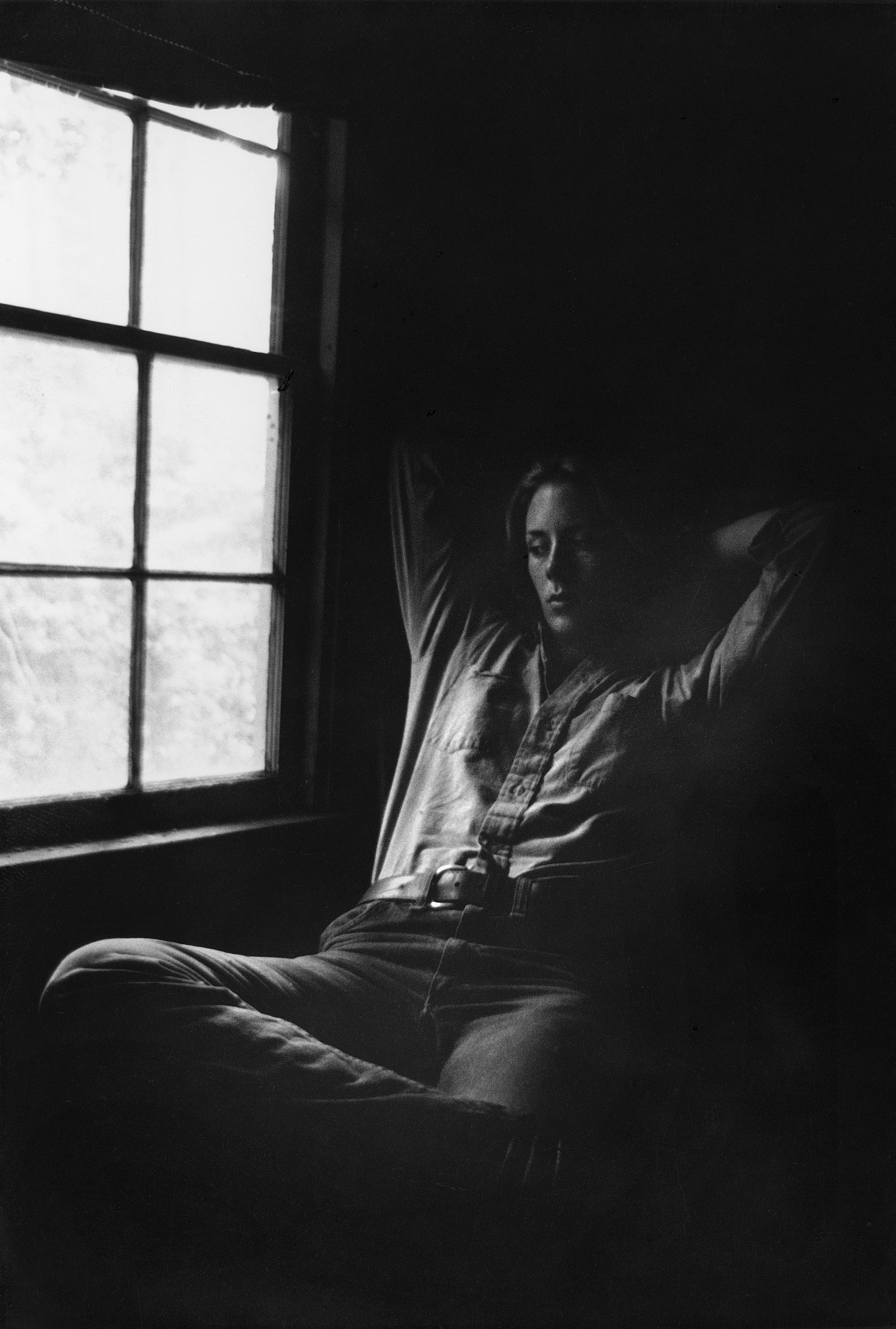
I shot with Susan wearing faded denim jeans and a matching denim shirt — I believe she may have hiked in this outfit, practical and unassuming. She sat on an old weathered chair, its wood worn smooth by years of abandonment, her face and body lit by the soft, diffused window light filtering through dusty panes. I remember the way my hands trembled as I brought the camera to my eye, how I had to steady my breathing to keep from shaking the frame.
This was in the film days, every shot needed to count, every click of the shutter was an emotional, financial and time commitment. I was acutely aware that I couldn’t just fire away endlessly—each exposure was precious, each frame had to matter. The pressure made me hesitate, made me study the scene longer, made me question whether this angle or that expression was the right one.
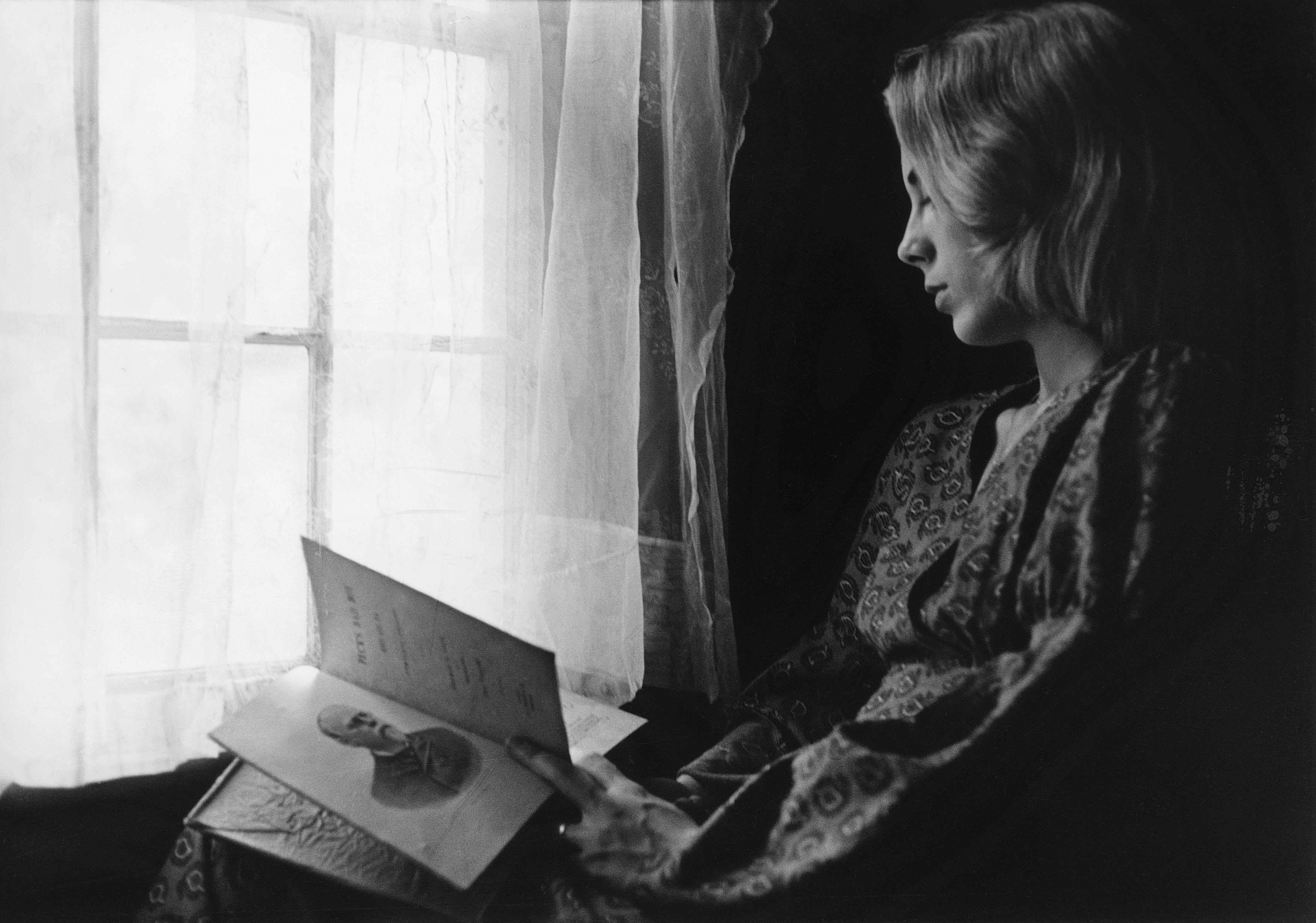
Susan also brought a simple cotton dress that she changed into while I patiently waited for her return, my hands shaking as I checked and rechecked my camera settings. I busied myself exploring the rooms of the abandoned house, looking for different light, different textures, trying to calm the flutter of nerves in my chest. This was uncharted territory—photographing a woman, especially one I knew, felt charged with an awareness I hadn’t anticipated. I wanted to be respectful, professional, to make her feel comfortable, but I also wanted to create something beautiful, something that would prove to both of us that I could do this.
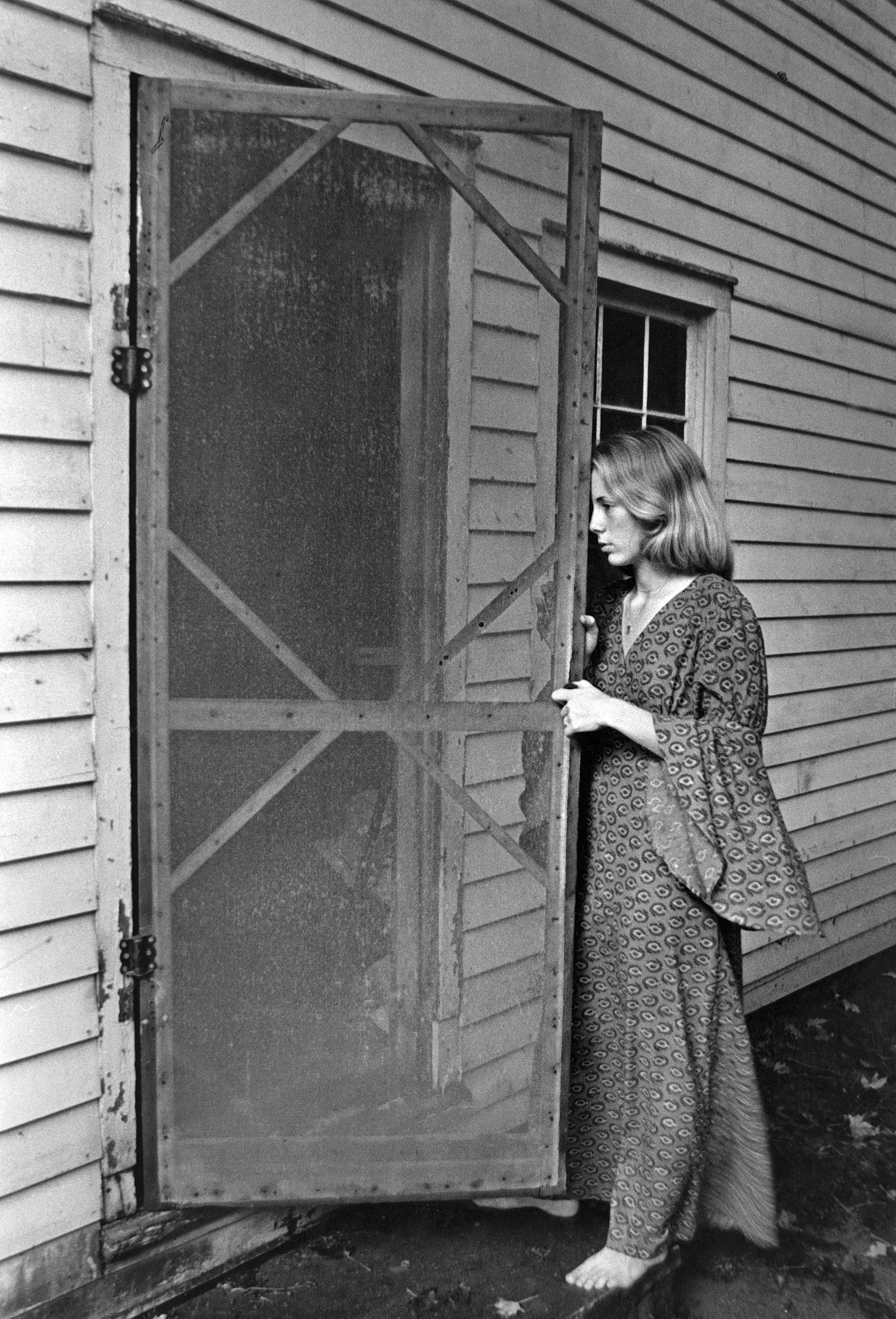
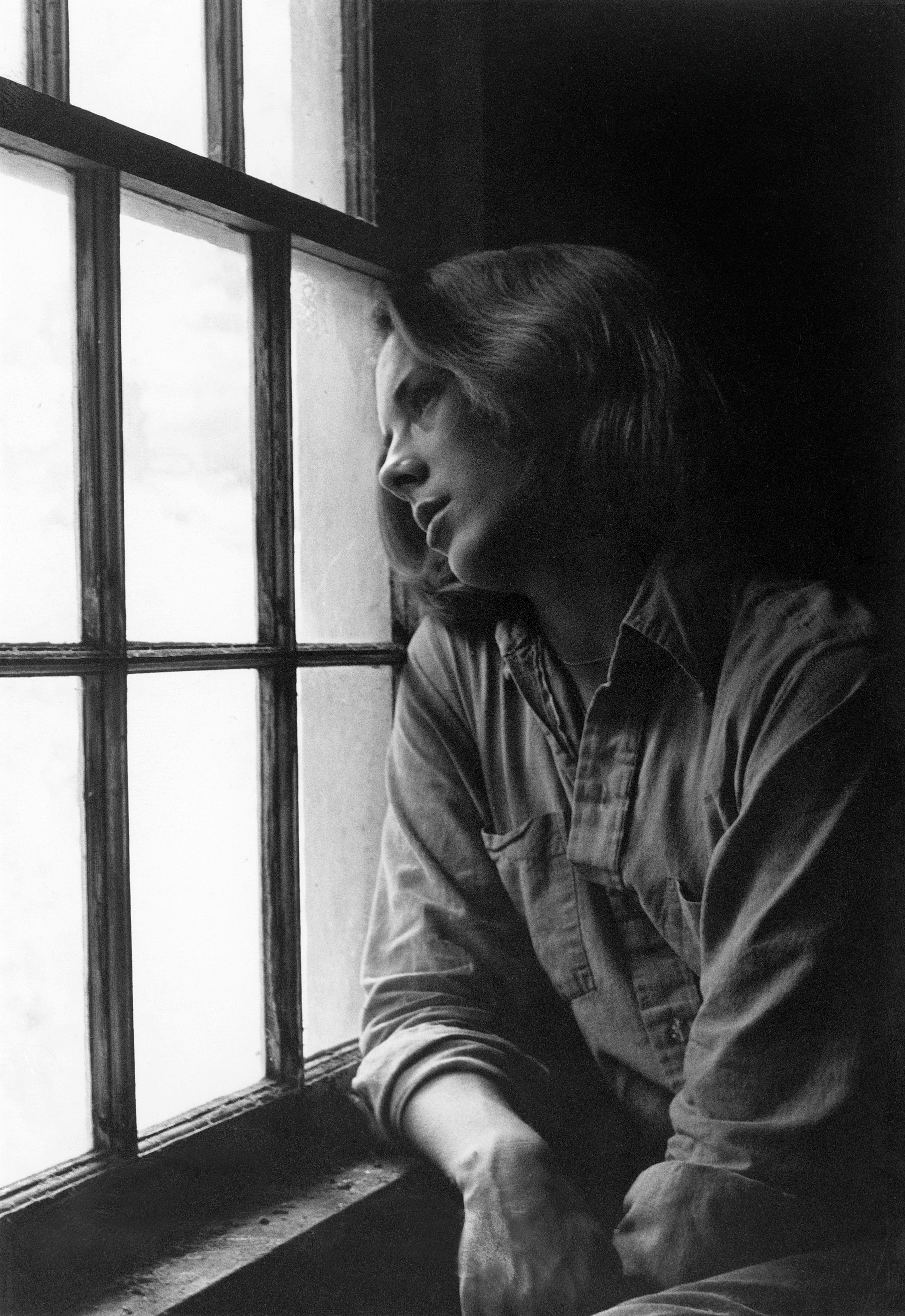
I have no idea how the final image of Susan came about, the one where she is leaning her head against the splintered door frame, her expression distant and dreamy. It wasn’t planned or posed—somehow we just arrived there together, in that moment of grace. A gentle breeze caught her dress, lifting the thin fabric just slightly, and resulting in a slight motion blur from the slow exposure. The soft light caressed her face, and for a heartbeat everything aligned—the mood, the setting, the unguarded look in her eyes. I pressed the shutter, holding my breath, hoping the image would hold what I was seeing. Even today I feel the spirit moving through that image — something honest and unplanned, captured in that fleeting moment when I was just learning to see. A moment where two humans, a camera, and the moods of nature came together to create a magical image.
Walking back through those woods as the sun began to sink lower, I felt different—lighter somehow, despite the uncertainty of whether the film would reveal what I thought I’d captured. The anxiety had transformed into something even more powerful: anticipation, possibility, and the stirring of creative hunger.
My next shoot couldn’t come soon enough.
- - -
I found the prints in an old manilla envelope with Susan’s name and the date, my name and address rubber-stamped in blue in the upper right corner. This is Fall 2025 — the images were created 51 years ago— the emotions unchanged over time. Crazy how our mind works, the memories over a half century ago, as real as the original moment.


Comments