Under the Red Safelight

Updated: Sep 10
A shop teacher, a home darkroom, and the beginning of a fifty-year journey
The house lights came up for intermission. I was making my way toward the lobby when I heard my name. I turned to see Mr. Miller, my 8th grade Shop teacher, someone I hadn’t seen in a few years. I was surprised he recognized me at all.
As a high school Junior, I was obsessed with my newfound love of photography but not yet knowing how to process film or make prints. Mr. Miller said to call him George, but that didn’t seem right to a sixteen-year-old. We caught up quickly during those 15 minutes, discovering our mutual love for photography. He offered to teach me how to process film and how to make prints in his home darkroom.
Elated, I called him the next day. He was quite accommodating and we set a time to meet, which would need to be after his work day ended, late afternoon. The only issue was that he lived a half-hour away, a route that I would need to plot on a map through winding back roads foreign to me. I had just gotten my driver’s license a few months ago and my parents were happy to let me drive the family wood-paneled Toyota Corona. After years of driving me everywhere, I could drive myself! I found the New Jersey road atlas, dog-eared from years of use. I meticulously wrote down the directions.
I remember my first visit, walking into the darkroom, smelling the pungent chemical odors, the enlarger and equipment bathed in the glow of the red safelight. George taught me how to process film and make black & white prints. Processing film felt like science class, pouring out precise amounts of chemicals, watching the water temperature carefully, gently squeezing the edges of the film to roll onto the stainless steel reels in the pitch black darkness.
“Squeeze too hard, Ron,” he admonished, “and you will crimp the edges.”
But making prints - that was where the magic happened. I watched George, his 6 foot 2 inch frame almost dancing in the red glow, moving his hands like an orchestra conductor, dodging and burning the light to lighten or darken areas of the print.
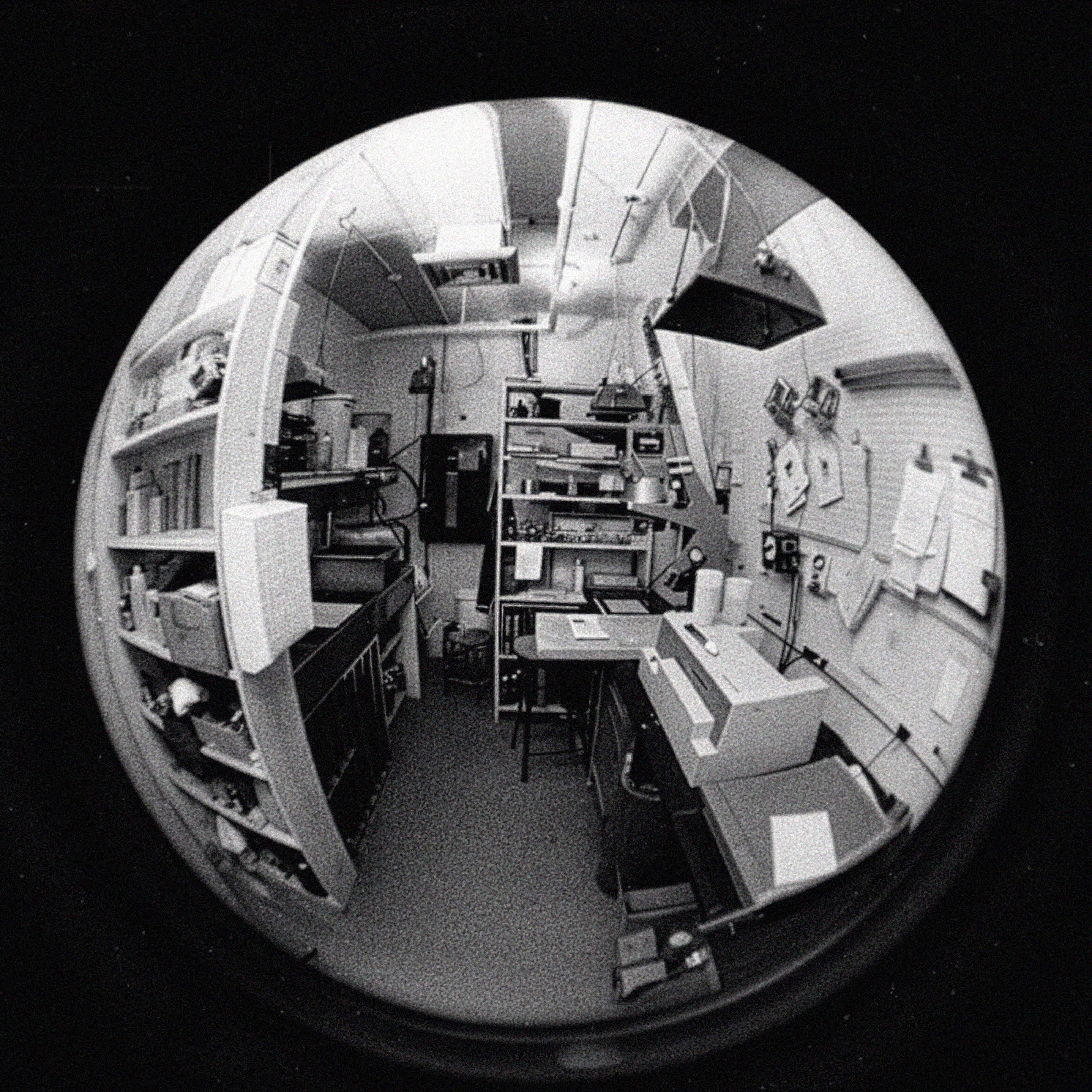
The darkroom at Davidson College in 1977, just a few years after I learning to develop and print in high school, in Flemington New Jersey.
Later on, he would share his advanced techniques, handcutting pieces of cardboard to dodge and burn, bringing the vision to life, and finally using a pencil with special inks to retouch negatives and “spot” prints.
The printing process requires the photographic paper to be immersed first in a “developer” to bring the image to life, then a “fixer” to arrest the development, and then a tray of water to wash the print. Washing took up to 30 minutes and with the hour already late at George’s house, I would transfer the prints to a deep Tupperware container, placing the container on the floorboard of the Toyota Corona, making good use of the curvy roads to gently wash my latest creations.
At home, my Mom and Dad and brother and sister were long asleep as I snuck in the back door, Tupperware in hand. Stepping over Terri, the golden retriever, careful not to wake her, I would hang the prints across the laundry room to dry overnight.
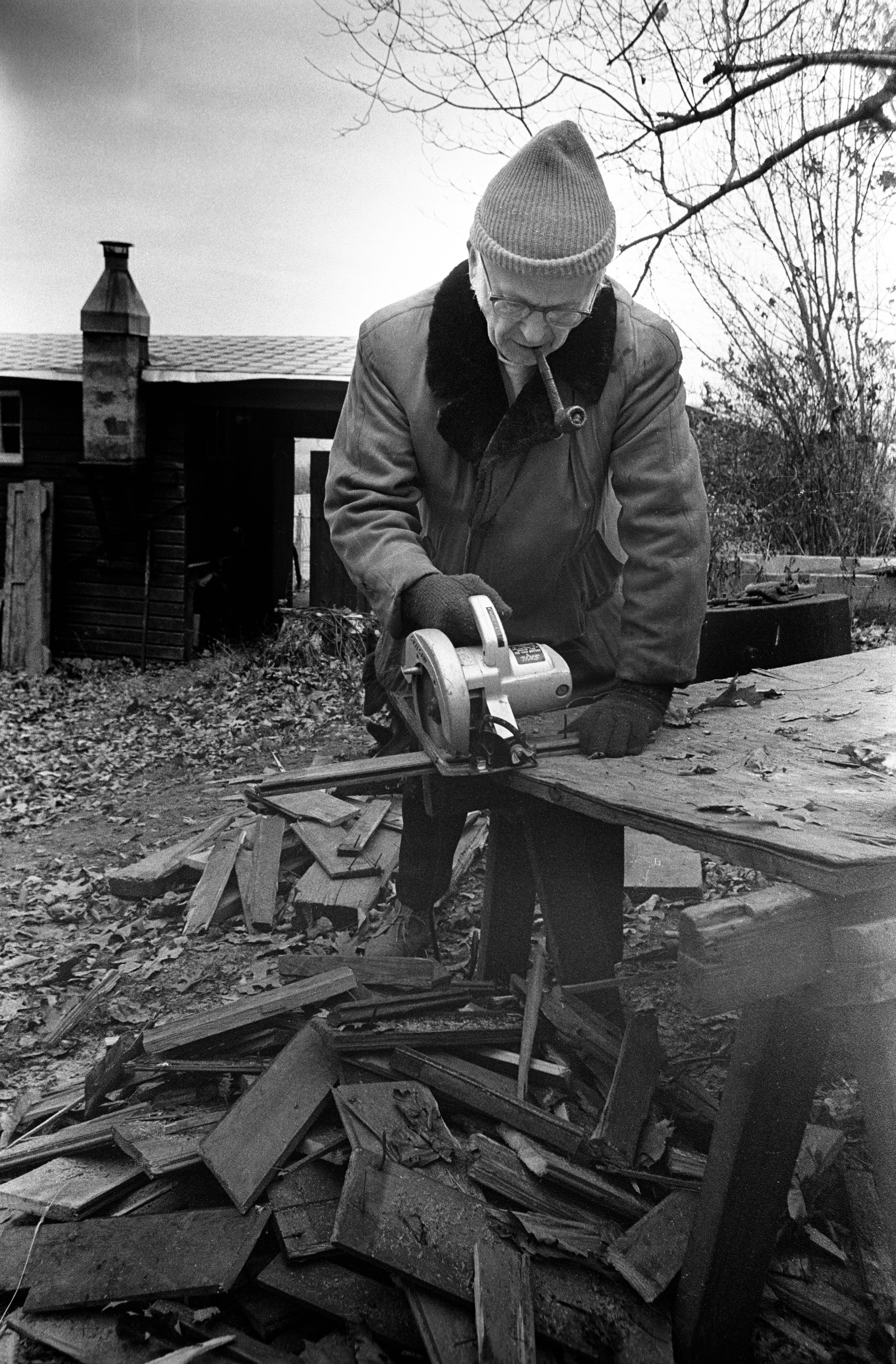
My Dad, cutting up wood for kindling, sometime in the early 1970s. I was just getting started in photography, photographing the things close to me.
In the coming months, my Dad—proud to use his carpenter skills—helped me build a darkroom underneath the basement steps. For a man of few words, his effort was a vote of confidence.
Even today, working in Photoshop, Mr. Miller’s influence—my computer mouse moving like those hands in the red glow, still burning and dodging to bring the vision to life.


Comments